UMass Boston

History MA

Build a career that preserves and interprets history.

Request Info Apply

Description of the image

Request Info

Loading...

About the Program

Shape your future in a place shaped by the past with UMass Boston’s Master of Arts in History. Build advanced research, writing, and analytical skills in a program that balances rigorous academics with the flexibility working students need to succeed. Through small, seminar-style courses spanning U.S., European, and non-Western history, you’ll gain a broad yet in-depth understanding of the field. Choose from two tracks, History (online or in person) covering broad historical topics and research methods, or Public History (in person) focusing on applying history in real-world settings like museums, archives, and cultural institutions.

Experience Boston as your classroom, giving you access to archives, libraries, museums, and historical institutions. With courses offered in the late afternoon and evening, you can take full advantage of the city while fitting graduate study into your schedule.

Here’s your chance to:

  • Develop research, writing, and analytical skills through in-depth historical study, opening doors to careers in history or further study in a PhD program.
  • Apply historical research and analysis to real-world questions, using primary sources and case studies to understand how the past continues to influence today.
  • Study where America’s history took shape. Visit the John F. Kennedy Presidential Library, Edward M. Kennedy Institute, and Massachusetts State Archives next to campus, and then walk the Freedom Trail, Faneuil Hall, and Boston Common, all in the heart of Boston.
0
of History MA alumni are employed in the field
UMass Boston Survey Data, 2020-2022
0
mean salary of History MA alumni
UMass Boston Survey Data, 2020-2022
0
projected job growth through 2034 (faster than the average job growth rate)
U.S. Bureau of Labor Statistics

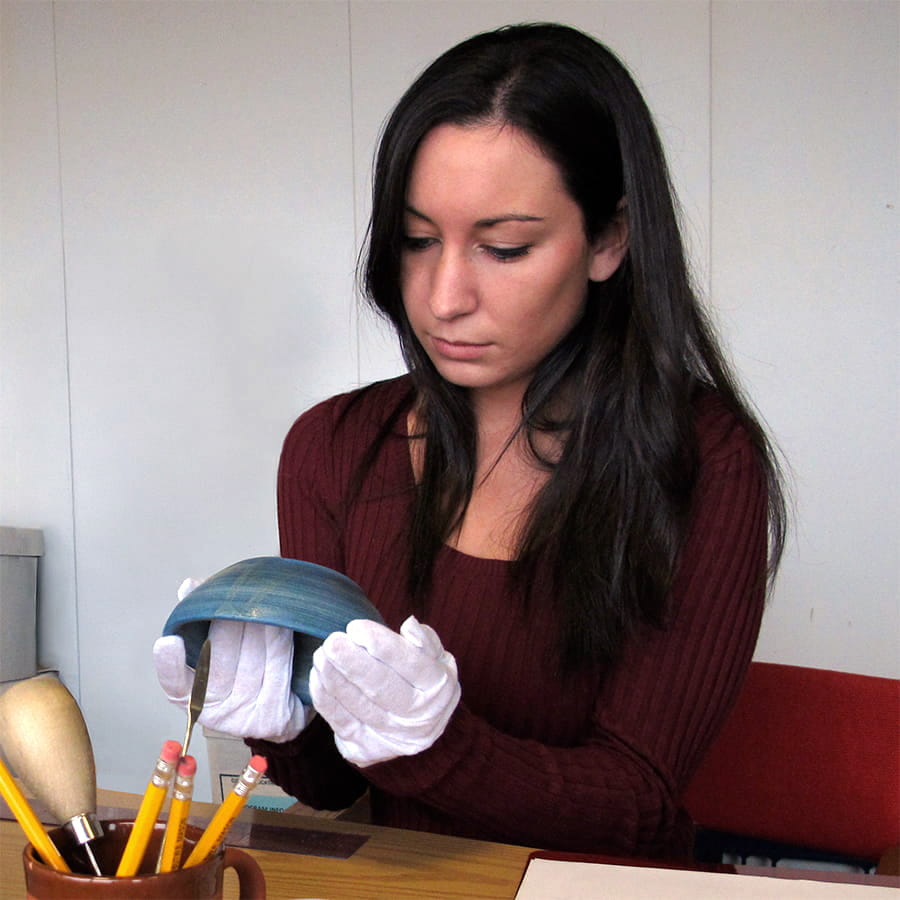
Student examining and working on pottery.

Career Possibilities

Graduates apply critical thinking, research, and analytical skills across a wide range of professional settings. Whether in education, public service, cultural institutions, or research-focused roles, the History MA prepares students to analyze complex information, communicate effectively, and make an impact in their chosen field.

Here’s where this degree can take you:

  • Instructor
  • Museum Professional
  • Archivist
  • Public Historian
  • Writer
  • Researcher
  • Cultural Program Manager
  • Editor/Publisher
Example Employers of Program Graduates
UMass Boston History MA alumni launch careers at museums, national parks, universities, and more, including:
Massachusetts Historical Society Logo
National Park Service Logo
Plimoth Patuxet Museums Logo
Historic New England Logo
Boston University Logo
Brown University Logo

Student Stories

Rachel H.
My favorite aspect of attending UMass Boston was the professors. They are all incredibly kind and understanding but also know when to push and challenge their students. Each is an expert in their own topic and they all provide unique personal experiences and stories from the field of public history. I felt as though I could go to any of my professors with questions about the class, the field, or just life. I still talk to several of my former professors regularly today.
Rachel H., '22
Joan I.
I chose UMass Boston because it allowed me to make connections, to work with other young professionals, and to learn from other experts in the field all at a public university. The archives and public history courses I took still influence my outreach work today. My experience as a public historian informs The History Project’s (THP) mission to serve Massachusetts’ LGBTQ+ communities through public programming.
Joan I., '14

Plan Your Education

How to Apply

Deadlines: 

  • Fall Priority Deadline: February 1
  • Fall Final Deadline: April 1

Application Fee: The nonrefundable application fee is $75. UMass Boston alumni and current students that plan to complete degree requirements prior to graduate enrollment can submit the application without paying the application fee.

Applicants must meet general graduate admission requirements in addition to the program-specific requirements:

  • Applications should include: college transcripts, three letters of recommendation, a 1500-word statement of purpose, and a writing sample between 5-10 double spaced pages.
  • Graduate Record Examination (GRE) scores are recommended, but not required.
  • Applicants will normally be expected to have majored in history as undergraduates and maintained a 3.0 cumulative average in the major. Applicants who did not major in history as undergraduates may be asked to pursue a program of coursework designed to remedy deficiencies in their preparation for graduate study.
  • We strongly encourage all interested applicants to contact the program track director. We are happy to discuss the program with you and guide you through the application process.
  • We also encourage you to contact faculty whose research and teaching interests align with yours. You may schedule a visit to campus with the Graduate Program Director. Visits to individual classes are also encouraged and should be coordinated with the course instructor.

Financing Your Education

Estimate Your Program Cost: Get a feel for your expected program costs using the Graduate Program Cost Calculator.

Program Cost Information: Significant tuition discounts are available to students enrolled in the online History MA program, as well as residents of Massachusetts, the other New England states, New York, New Jersey, and Pennsylvania. For more detailed information on costs, visit the Bursar's website for more information.

Assistantships: Each year, the History Department offers a limited number of Graduate Assistantships to newly admitted graduate students. Assistantships are “half-time”, which means students are expected to work 9 hours per week for the academic year. As compensation, graduate assistants receive a bi-weekly stipend. Graduate Assistants also receive a 100 percent tuition remission for the contract period and a 50 percent waiver of their Educational Operations Fee. There are some remaining student fees that Assistants have to pay. If Assistants get their health insurance through the university, they will also receive a discount on their Health Insurance Premium.

Assistants work as teaching assistants or research assistants. Teaching assistants are assigned to professors who teach large lecture sections. These assistants will assist with grading and general operation of the class. They may be asked to do research work for their professor. Research assistants are usually assigned to faculty members to assist them with their research projects. Other assistants may be assigned to the Graduate Program Director, the Undergraduate Program Director, the Public History Director, and the University Archives. Each year, one Graduate Assistant is assigned to assist the editors of the New England Quarterly, which is housed at UMass Boston. Online MA students are not eligible for Graduate Assistantships.

All admitted students will be considered for an assistantship, and will receive notification of an assistantship award after they are formally accepted into the program.
Program Details

History Track (In Person or Online) Curriculum

UMass Boston's Master of Arts in History offers a rigorous set of individually selected courses and supervised research and writing. Both demanding and flexible, the history track is designed for students who intend to pursue a PhD, secondary school teachers who wish to improve their knowledge of the field, and students who seek to test their capacity for graduate work.

Those who desire to pursue advanced study for their own intellectual enjoyment and development can also benefit from the program's design, and the department welcomes prospective students who have been out of school for a long time or who have majored in other areas of study and now wish to pursue the study of history.

All graduate courses consist of small seminars of no more than fifteen students, which affords all students close faculty attention and support. Not all students enter the graduate programs in history directly from college: the student body includes individuals who beginning graduate work after long absences from school. Applicants do not need to have majored in history as undergraduates, but they may be asked to pursue a program of coursework designed to remedy deficiencies in their preparation for graduate study.

Knowledge of a foreign language is not required for the Master of Arts in History. Thesis advisors may require a foreign language if they determine that competence in a particular language is necessary for students to conduct research on the topic on which a student will write his or her thesis. In that case, students must demonstrate competence in the foreign language to the satisfaction of their advisors.

The History MA program offers an online MA. Online courses are available to students enrolled in the traditional History MA program.

History Track Curriculum

For those writing a Thesis:

  • HIST 600: Research and Methods
  • HIST 605: Introduction to Historiography
  • HIST 690: Final Project Prep (Students should have at least 18 credits before taking FPP)
  • HIST 699: Thesis
  • Five electives, two of which can be upper-level undergraduate courses (300 level or higher)

For those writing a History Review Essay:

  • HIST 600: Research and Methods
  • HIST 605: Introduction to Historiography
  • HIST 690: Final Project Prep (Students should have at least 18 credits before taking FPP)
  • HIST 693: History Review Essay
  • Six electives, two of which can be upper-level undergraduate courses (300 level or higher)

Thesis

The thesis stands as the traditional culmination of a student's graduate work, and students who wish to pursue a PhD should plan to write a thesis. The thesis should be approximately 50-70 pages long and based on original research. It should be the equivalent to an article in a scholarly journal. Theses are written under the guidance of an individual faculty advisor and defended before a committee of three faculty members, one of whom may be from outside the department. For more information on thesis requirements, see the Graduate Program Handbook.

History Review Essay

The History Review Essay is an alternative to the thesis. This option is only for students in the History Track. These essays are 25-30 page reviews of existing literature that demonstrate wide, deep reading in and extensive knowledge of the student's chosen field. They are equivalent to the 'state of the field' essays that appear regularly in scholarly journals. Essays showcase the student's ability to synthesize, analyze, and evaluate secondary texts by asking critical questions about historiography, research methods, sources, and theory. History Review Essays are as challenging as theses, but highlight different skills. They are especially appropriate for those who do not plan future academic publications, for teachers looking to synthesize a broad range of scholarship, and for those who do not have ready access to primary source repositories.

For more information on curriculum, including course descriptions and degree requirements, visit the Academic Catalog.

Public History Track (In Person) Curriculum

Public historians study the way we remember and interpret the past. They use historical methodologies to preserve, collect, present, and interpret history with and for public audiences. Public historians work with historic landscapes, sites, parks and monuments; in museums and historic buildings; on film and the internet; and with community groups and organizations, families, and institutions.

They study public awareness and consciousness of the past and how various actors, including public intellectuals and public interest groups, seek to “raise” historical consciousness and nurture historical thinking.

Training in historical methodology is a crucial foundation for practicing public historians. That is reflected in the structure of this program—public history students earn an MA in History rather than a specialized MA in Public History. Public History students need to gain strong subject-area knowledge and research skills, as well as an introduction to the theory and methods of public history. This model provides a cross-disciplinary approach that benefits professional training for public history students.

Public History Track Curriculum

Students in the Public History Track complete 30 credit hours for the History MA. Students in the Public History Track have the option of writing a Thesis or completing a Capstone project.

For those writing a Thesis:

  • HIST 600: Research and Methods
  • HIST 605: Introduction to Historiography
  • HIST 620: Introduction to Public History and Popular Memory
  • HIST 625: Interpreting History in Public: Approaches to Public History Practice
  • HIST 698: Internship in Public History
  • HIST 690: Final Project Prep (Students should have at least 18 credits before taking FPP)
  • HIST 699: Thesis
  • Two electives

For those writing a Capstone:

  • HIST 600: Research and Methods
  • HIST 605: Introduction to Historiography
  • HIST 620: Introduction to Public History and Popular Memory
  • HIST 625: Interpreting History in Public: Approaches to Public History Practice
  • HIST 698: Internship in Public History
  • HIST 689: Capstone
  • 4 electives

For more information on curriculum, including course descriptions and degree requirements, visit the Academic Catalog.

Professional Training and Development

Training as a public historian requires engagement outside the classroom. We support student exploration of the field, learning from seasoned professionals and peers, developing their own career goals and next steps, and building professional networks. To these ends, the Public History Track requires students to participate in four skills-based or professional development activities outside of the curriculum during the course of their graduate career. Even students attending UMass Boston part-time should be able to meet the requirements before graduation if they undertake one professional development activity per semester.

Participation in extra-curricular workshops, institutes, webinars, conferences, and historical organizations helps students move from the academy into the professional world, and offer opportunities to explore practices in the field with minimal commitment. Students should inquire with the Director of Public History before selecting a specific opportunity. Only one of four activities can be virtual (except during public health crises). These opportunities will offer Public History students familiarity with and training in a variety of professional skill areas important in the work of public historians, and provide crucial venues and practice in networking.

Professional development opportunities are active in nature. They might include organizing, presenting or moderating at conferences, and participating in workshops, webinars, and other career development opportunities sponsored by relevant organizations such as NEMA, Mass Humanities, NCPH, AASLH, AAM, SAA, OHA, AHA or OAH. Students may elect to join one of these organizations to take advantage of their multiple program offerings. Our students have gained professional development by volunteering (both short and longer term commitments) for local historical organizations, serving on committees of public history organizations, taking advantage of workshops on relevant skills outside our curriculum, as well as traditional professional development strategies such as informational interviewing and working with the career center and professionals on writing a strong resume. These are only a few examples of relevant professional development activities.

Students may be asked to write a short reflection on one or each of these events and post it on our Public History Wordpress site along with at least two relevant images. Please contact your graduate advisor if you have questions about appropriate activities or necessary documentation of participation.

Programs that are passive in nature (such as simply attending an academic lecture or conference, or visiting a museum) are not considered skill-based and will not be accepted as fulfilling this requirement.

Below are some examples of what can be considered "skill-based programs". As the list demonstrates, students can participate in these programs at little to no cost.

  • Volunteer. Many local public history organizations are in dire need of assistance. Students should consider volunteering for an organization and filling a much needed gap. These can be longer or short term commitments.
  • Network. As a New England Museum Association (NEMA) member, a student can participate in one of the Young and Emerging Museum Professionals events. These events are geared towards professionals who have been in the field for less than ten years, and they are meant to serve as "networking and educational opportunities".
  • Workshop. Northeastern University hosts a Boston Digital Humanities Listserv. They periodically offer graduate students, faculty, staff, and enthusiasts workshops on digital humanities skills. Other regional and local professional organizations offer skill-focused workshops and webinars.
  • Present Research. Most public and local history conferences offer graduate students the opportunity to present their research or their work on a special program.
  • Organize Event. In addition to presenting at a history conference, students can also gain many skills by organizing a history conference. Therefore students who actively participate in several conference organizing activities can count this activity towards their professional development. In this context, actively participating includes, but is not limited to, attending organizing meetings, engaging in decision-making processes, coordinating themes, ideas, and speakers/panels, and aiding in the execution of the actual conference.
  • Grant Writing. Grant writing is an important skill set for public historians. Students can learn about the grant-writing process by assisting either an on-campus or a local organization with a grant application.
  • Work in Committees. Some professional organizations and historical organizations provide opportunities for student or volunteer participation on committees.
  • Interview Professionals. Before leaving UMass Boston, students should begin thinking about potential workplaces and career goals. Students are encouraged to contact an organization and engage in an informational interview where they can ask advice on professional preparation and career goals, the industry, professional specializations, and workplace culture.
  • Meet with Career Services. Students should take advantage of UMass Boston’s Career Services. Students can make appointments to meet one-on-one with counselors about resumes/CVs, cover letters, or mock interviews.
  • Assist in Public Programming. Support young historians by judging for a Massachusetts History Day competition.
  • Volunteer. Help document people, places, and events in Massachusetts history for University Archives and Special Collections, Healey Library’s digital history project. Spend a day volunteering for the Mass Memories Road Show, which creates a digital portrait of the state’s history and culture, community by community.
  • Learn a new skill. Get to work on filling your ever-expanding public historian’s toolkit. Take advantage of opportunities to learn some new software that will serve you well in public history, such as WordPress, Omeka, PastPerfect, GIS, Raisers’ Edge, to name only a few. You may not learn these in your classes, but you will use them in your career.

There are multiple opportunities out there for aspiring public historians. Students should consult with the Public History faculty/staff before participating in a program to ensure that such a program meets the requirements.

In order to receive credit for the Professional Training and Development requirement, students must submit proper documentation (confirmation letter, receipt, name tag, etc.) and a one page description of the activity OR a blog post with images to the Director of Public History, who will keep track of student progress. Submit documentation and blog posts within two weeks of participation.

Students who write a Thesis must complete the Professional Training and Development requirement before they schedule a thesis defense. Students who write a Capstone will not receive their final Capstone grade until they have completed the Professional Training and Development requirement.

Learning Outcomes

The Master of Arts Program in History offers students a rigorous yet flexible program of study in the field of history. Rather than being merely a collection of courses, the History MA degree at UMass Boston requires intense commitment to historical scholarship and practice. The MA serves as a terminal degree for students seeking exposure to historical study before entering a variety of careers, as well as a preparatory degree for those interested in pursuing a PhD at another institution. The program offers two tracks: Public History and History. Only the History track is available to online students.

  • The History MA program is designed to enhance the research, writing, and analytical skills of students and also to provide a broad and advanced background in history content. Our graduates have gone on to a variety of exciting positions within the history profession; alumni work as high school teachers, college history professors, university administrators, museum professionals, archivists, public historians, and writers.”
  • Through the completion of coursework and field experiences, Public History students demonstrate knowledge of public history theory, the literature of the field and ethical practice, the environments of public facing work, and the issues that confront public historians in the field, through completion of public history coursework and field experiences.
  • Our public history students put theory into practice in public facing projects and environments, applying methods and skills in analysis and interpretation that makes history accessible to public audiences, through internship(s) and a culminating capstone or thesis project.
  • Our public history students have built professional knowledge and networks through participation in professional communities of relevant organizations, in professional and/or academic conferences central to the field, in advocacy efforts, and/or in public history initiatives in the community.

Graduation Criteria

Major Requirements

Complete 30 credits which include 6 or 8 required courses and 4 or 2 electives, depending on choice of capstone or thesis. 

Capstone: Completion of a master’s thesis or capstone project.
Track: Students may select a track in history, public history.
Minimum grade: No course with a grade below C may be applied toward the program. No more than one course with a grade below B- may be applied toward the program.
Residency: With approval of the graduate program director, no more than six credits from another institution may be applied toward the elective requirements for the online History, MA degree.
Statute of limitations: Five years.

Contact

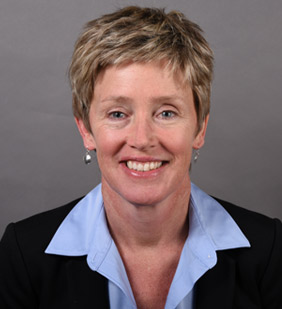
Graduate Program Director Kelly Colvin
kelly.colvin@umb.edu
(617) 287-6860

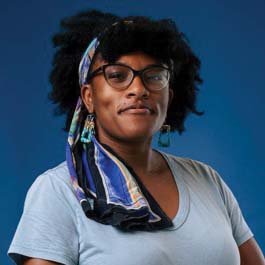
Director of the Public History Track Jane Becker
jane.becker@umb.edu
(617) 287-6885

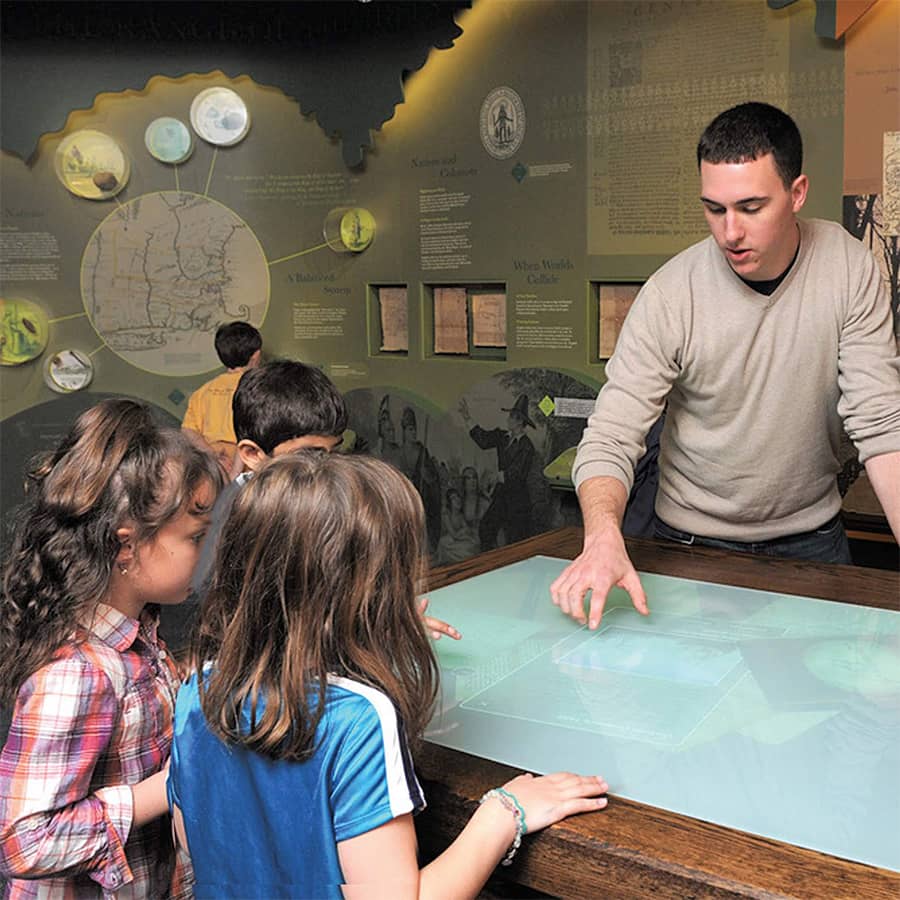
Graduate student, Phill, working with students at the Commonwealth Museum.

Student Voices in History

Students and alumni preserve and bring history to life through a blog showcasing their public history work, research, and community projects. They document local and regional stories, connect with archives, museums, and community groups, and share their findings with public audiences. Through their posts, students make history accessible, inclusive, and relevant, applying their studies to the real world.

Explore Our Blog

Program Faculty

Map of Boston Harbor

Academic Community

Explore the department and college that supports your journey in History.